
Air purifiers
Looking for an effective air purifier for the workplace, commercial premises or home? Acetec APU air purifiers reduce airborne particles such as dust, pollen, allergens, smoke and mould spores, as well as certain gases and odours. The combination of high air circulation and efficient filtration helps provide cleaner indoor air in both smaller and larger spaces.
Air purifiers with HEPA H14 and multi-stage filtration
Acetec APU air purifiers are developed in Älvsbyn, Sweden, and draw on extensive experience in solutions for a healthier indoor environment. The filtration system combines a pre-filter (G4), a VOC Molecular Filter with Carbon RAD and a high-efficiency HEPA H14 particulate filter.
The APU range is suitable for offices, preschools, clinics, workplaces, dining areas and homes. With models such as APU 500 and APU 1700, there are solutions for different room sizes and requirements. Explore the range below and find the right air purifier for your environment.

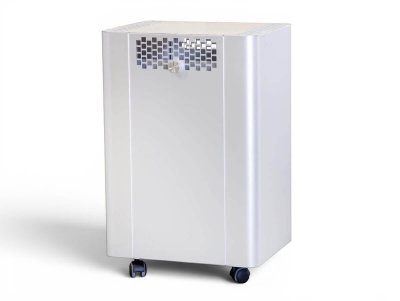 Air purifier APU 500APU 500 is a compact and high-efficiency air purifier for homes and smaller premises.
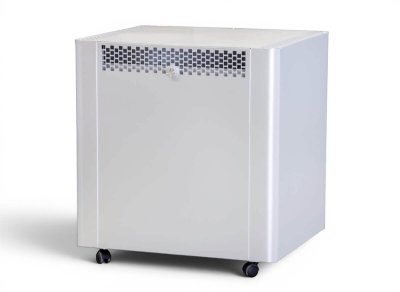 Air purifier APU 1700APU 1700 is an air purifier for larger premises, reception areas, preschools and workplaces.
Frequently asked questions
How does an air purifier work?
An air purifier draws in room air and passes it through one or more filters that capture particles and can reduce certain gases and odours. The filtered air is then returned to the room, reducing the amount of dust, pollen, smoke, mould spores and other airborne particles in the indoor air.
Where can an air purifier be used?
Air purifiers can be used in homes, offices, schools, preschools, clinics, workplaces and other spaces where indoor air filtration is needed. Acetec APU 500 is suitable for smaller spaces, while APU 1700 is designed for larger premises with higher airflow requirements.
Which filters do Acetec APU air purifiers use?
Acetec APU air purifiers use a multi-stage filtration system:
- Pre-filter (G4) – captures larger particles such as dust and dirt.
- VOC Molecular Filter – Carbon RAD (Rapid Adsorption Dynamics) – reduces certain gases and odours.
- HEPA H14 particulate filter – provides a high level of separation of small airborne particles.
The combination of several filtration stages provides efficient air filtration and makes the APU range suitable for environments with varying requirements for air quality, airflow and operation.
How often should the filters in an air purifier be replaced?
The pre-filter should normally be replaced approximately once a year, depending on usage, operating time and the amount of particles in the air. The HEPA filter normally has a longer service life, but always follow the recommendations for the specific model.
In dusty or heavily loaded environments, the filters may need to be replaced more frequently. Regular filter replacement helps maintain airflow and filtration performance over time.
What should you consider when choosing an air purifier?
Choose an air purifier based on room size, airflow, filter type and the particles or pollutants you want to reduce. In high-occupancy or demanding environments such as schools, offices and public buildings, it is important to choose a model with sufficient capacity for the space.
Also consider noise level, positioning and future filter replacement. A correctly sized air purifier with the right filters provides good conditions for continuous filtration of the indoor air.
