
Mould in the attic: Signs, causes and solutions
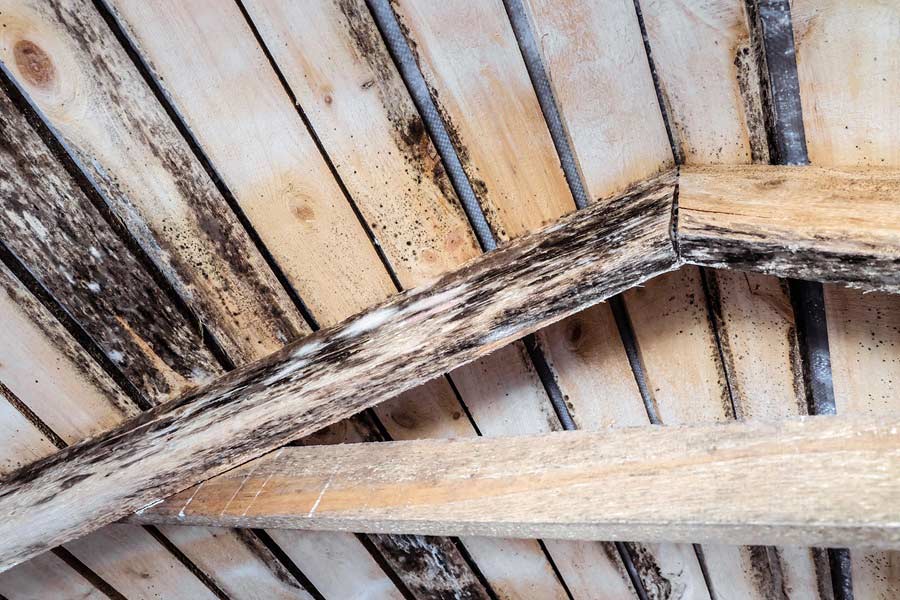
If you have found mould in your attic, start by identifying and fixing the source of moisture. You then need to assess how the affected materials should be treated. A dehumidifier can help prevent further problems, but it will not remove mould that is already there.
How can you recognise mould in the attic?
Mould often appears as dark, pale or patchy growth on roof boarding, rafters and other timber surfaces. Sometimes the first sign is a musty smell when you open the loft hatch. Look out for:
- Black, grey, green or white patches on timber surfaces.
- A musty or earthy smell in the attic or living areas. Read more about musty smells coming from the attic.
- Frost, condensation or water stains on roof boarding and rafters.
- Damp insulation or timber that has started to soften or decay.
Black mould and white mould – what is the difference?
Black mould and white mould are everyday terms for growth that looks dark or pale. Colour alone cannot identify the species or tell you how serious the damage is. If you notice suspected mould, investigate the moisture source regardless of its colour.
Mould in the attic does not automatically mean that the air in your home is affected, but odours and airborne contaminants can pass through gaps. If there is extensive growth or a smell in the living areas, ask a qualified specialist to assess the situation.
Why does mould develop in a cold attic?
Mould is more likely to grow when timber and other materials remain damp for long enough. The risk depends on temperature, moisture levels, the material and how long those conditions last. A single reading of relative humidity therefore cannot tell you whether mould is actively growing.
There are several common sources of moisture in a cold attic:
- Air leaking from the rooms below: Warm, humid indoor air can escape through the loft hatch and gaps around service penetrations. As it cools, condensation or frost may form.
- Roof leaks: Rain or snow can get in through damaged roof components or poorly sealed penetrations.
- Humid outdoor air: Under certain conditions, a ventilated attic can have high humidity even when the roof is not leaking.
If the house has been fitted with additional insulation, the attic may also have become colder. Read more about causes of moisture in the attic and how to control moisture in your home.
How to deal with mould in the attic
Treating the visible patches alone will not solve the problem. First find out why the materials became damp.
- Identify the moisture source. Check the roof, loft hatch, penetrations and signs of condensation. Ideally, track temperature and humidity over time.
- Fix the cause. Repair roof leaks and seal air leaks from the living areas. Do not change the attic ventilation or close outdoor vents without first assessing the effect on the roof construction.
- Assess the growth and materials. Surface mould and water-damaged or decayed materials may need different measures. Affected building components may need cleaning or replacement depending on the extent of the damage. Seek advice if you are unsure.
- Check the results. Make sure moisture levels come down and that odours or mould do not return as the seasons change.
Simply spraying a mould treatment onto a surface will not address the moisture source. Chemical treatments have limited value on damaged materials, and improper removal can spread particles into the living areas. Read more about mould remediation and moisture control.
When is a dehumidifier needed in the attic?
If humidity stays high after roof leaks and other clear sources of moisture have been dealt with, dehumidification can be a useful additional measure. A desiccant dehumidifier also works at low temperatures, making it well suited to many cold attics.
The installation must suit the attic. Air tightness, the distribution of dry air and the discharge of moist exhaust air all need to work together. Do not cover a cold attic with plastic sheeting as you would the ground in a crawl space. Read our guide to installing a dehumidifier in a cold attic and always follow the instructions for the particular model.
An accessible control panel makes it easier to check temperature, humidity and any alarms without entering the attic. Dehumidification can reduce the risk of new growth, but it does not replace investigating and dealing with existing mould damage.
When should you seek professional help?
Contact a moisture specialist if growth is extensive, timber is damaged, smells reach the living areas or you cannot locate the moisture source. If you need help choosing and installing a dehumidifier, we can pass your enquiry to an installation partner who can assess your attic.
