
Which dehumidifier should you choose?
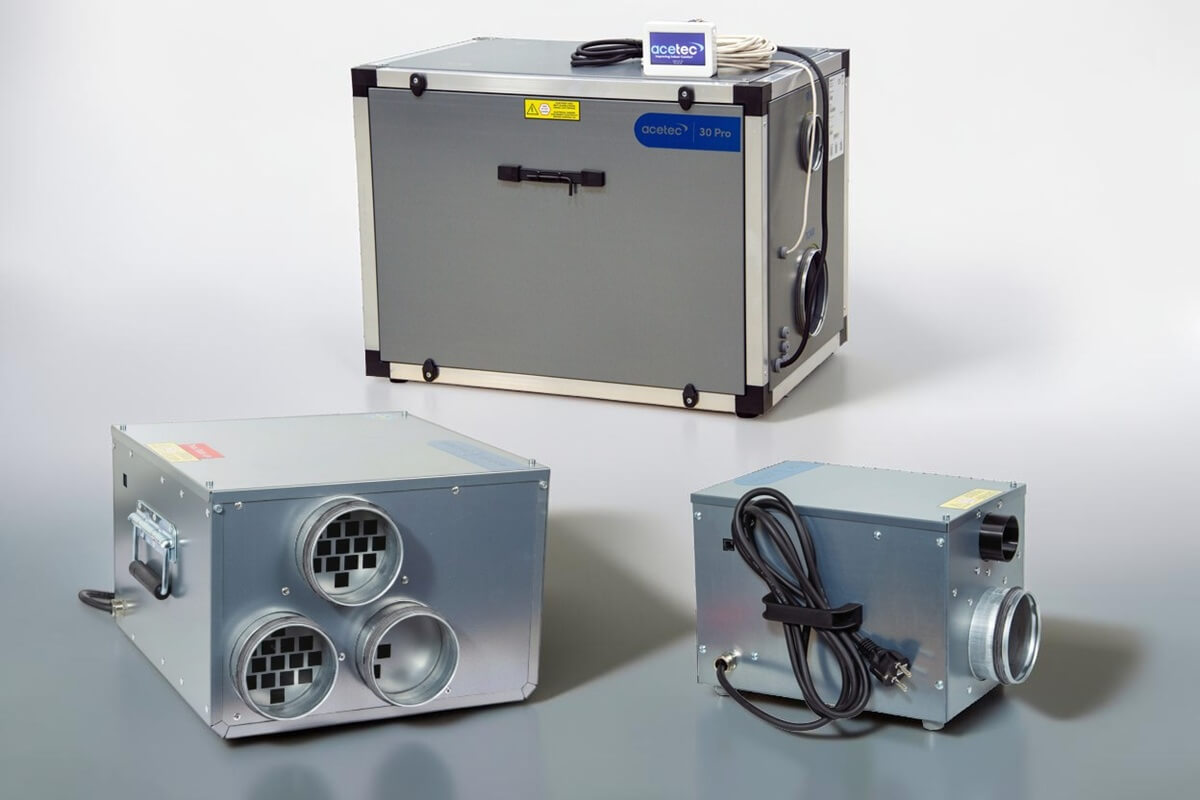
Choosing a dehumidifier? Start by checking how cold the space gets. In a crawl space, an unheated loft or an unheated garage, a desiccant dehumidifier is often a good choice. A refrigerant dehumidifier may work better in a warmer utility room or heated basement. You also need to consider the size of the space and how much moisture enters it.
Desiccant or refrigerant dehumidifier – what's the difference?
Desiccant dehumidifiers for cold spaces
A desiccant dehumidifier uses a moisture-absorbing material to remove water vapour from the air. In our EvoDry units, the moisture is expelled from the space in a separate stream of humid exhaust air. This technology works even at low temperatures, making it a common choice for crawl spaces, unheated lofts and cold storage rooms. Our range includes EvoDry desiccant dehumidifiers for different types of spaces. Read more about the difference between desiccant and refrigerant dehumidifiers.
Refrigerant dehumidifiers for warmer spaces
A refrigerant dehumidifier cools the air so that water vapour condenses and is collected or drained away. It can be a good option in a heated basement or utility room. As temperatures fall, its moisture-removal capacity generally decreases, and frost may form on the cooling coil. Some models have a defrost function and can operate in cooler conditions, so 15°C is not a strict cut-off. Check the model's specifications at your intended operating temperature. Read more about operating temperatures and refrigerant dehumidifiers at ENERGY STAR.
Which dehumidifier suits your space?
The temperature and source of moisture matter more than the name of the room.
| Space | Where to start |
|---|---|
| Crawl space | Often a desiccant dehumidifier. First check for ground moisture, water ingress and air leakage. |
| Unheated loft | Often a desiccant dehumidifier if moisture problems persist after roof leaks and air leaks from the living space have been addressed. |
| Garage or storage room | Desiccant technology for cold spaces. A refrigerant dehumidifier may be suitable if the temperature stays higher. |
| Basement or utility room | Start with the temperature. Refrigerant dehumidifiers often suit heated rooms; desiccant models often suit cooler spaces. |
If you're unsure about the conditions beneath your house, read more about moisture in crawl spaces. For unheated lofts, see our guide to moisture in the loft. If you have a garage, you can also compare ventilation and dehumidification in garages.
What size dehumidifier do you need?
Room volume is a useful starting point, but it isn't enough to determine the capacity you need. Take a 40 m² garage with a 2.5-metre ceiling. Its volume is 100 m³. If you regularly park a wet car inside or open the garage door several times a day, more moisture enters than in a storage room of the same size.
Check the following before choosing a model:
- Temperature: Use the lowest typical temperature during the periods when dehumidification is needed.
- Moisture load: Account for ground moisture, wet vehicles, laundry and air entering from outside.
- Airtightness and air distribution: The dehumidifier must be able to treat air throughout the space, including behind partitions.
- Operation and maintenance: Check energy consumption under actual conditions, noise levels, filter changes and how you can monitor humidity.
For more examples of different room sizes, read our guide to sizing a dehumidifier.
Plan the installation before making your choice
A desiccant dehumidifier usually needs a hose or duct to discharge humid exhaust air outside. In crawl spaces and unheated lofts, airtightness, positioning and the distribution of dry air are also important. A refrigerant dehumidifier instead needs a way to collect or drain condensate, such as a tank or drain connection.
If water is leaking through a roof, wall or pipe, fix that first. A dehumidifier can lower humidity but cannot repair the source of a leak. Always follow the installation and maintenance instructions for your specific model.
